
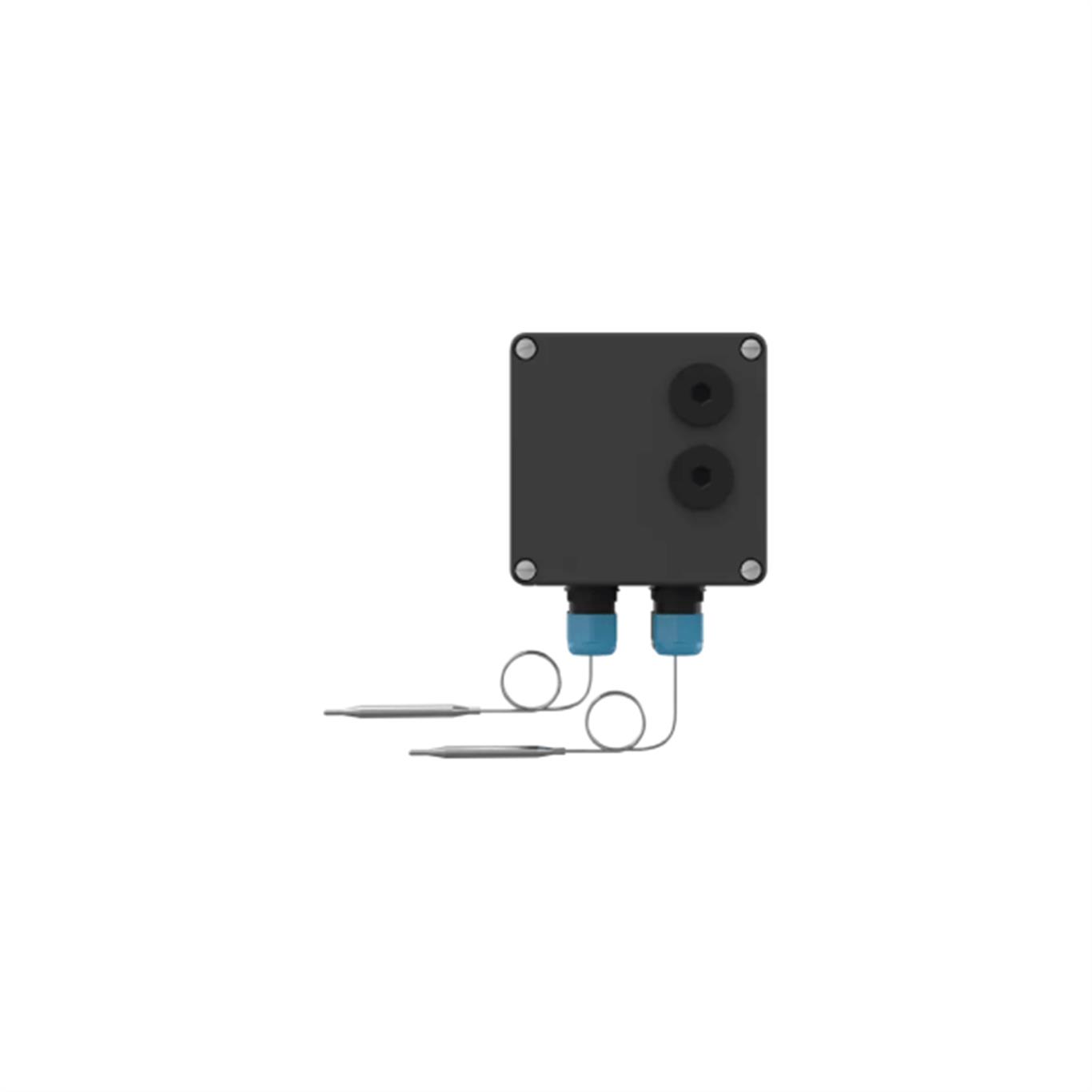
JUMO exTHERM S200
Surface-mounted thermostat for ATEX and SIL applications
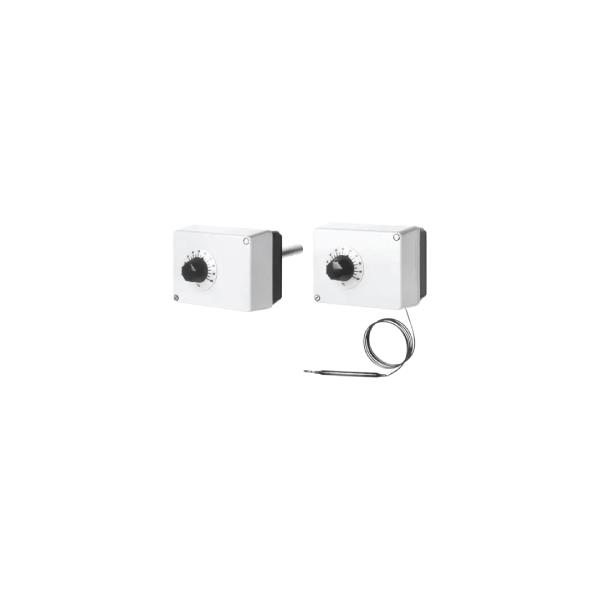
The surface-mounted thermostat is available as a single or double thermostat with capillary or rigid thermowell. A microswitch is used as the electrical switching element. The device operates according to the principle of liquid expansion. It is available as a temperature monitor, safety temperature monitor, and safety temperature limiter. Additional thermowells allow use in zone 0.
 |
 |
 |
|
[Ex i] version for
mounting in zone 1/21 |
PUSH IN
connection technology |
Quick and secure
connection |
|
|
|
|
|
|
|
|
|
|
|
|
|
|
|
 Simple implementation
GENERAL TECHNICAL DATA |
| Housing | Polyester, black |
| Circuitry | NAMUR |
| Control ranges | -20 to +500 °C |
| Ambient temperature | -40 to +75 °C |
| Protection type | IP54, IP65 optional |
| Mounting | PUSH IN terminal block |
| Approvals | [Ex i] approval for zone 1 or 21, SIL 2 approval according to DIN EN 61508 (currently in preparation) |
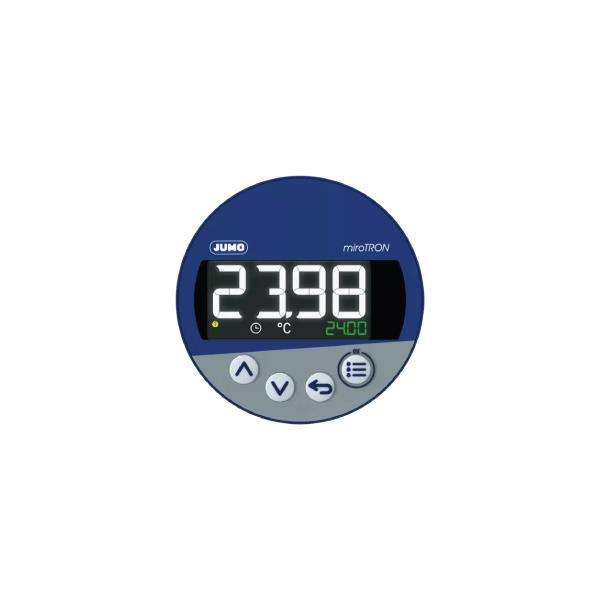
Electronic thermostat with optional PID two-state controller function
The JUMO miroTRON is a digital electronic thermostat for simple temperature control with optional PID two-point controller function and measurement input for RTD temperature probes. In the 60 mm and 80 mm round installation format, the JUMO miroTRON offers an alternative solution for mechanical dial thermometers or contact dial thermometers.
 |
 |
 |
|
Flexible in its
application |
Intuitive operation
in plain text |
Retrofit for dial
thermometers |
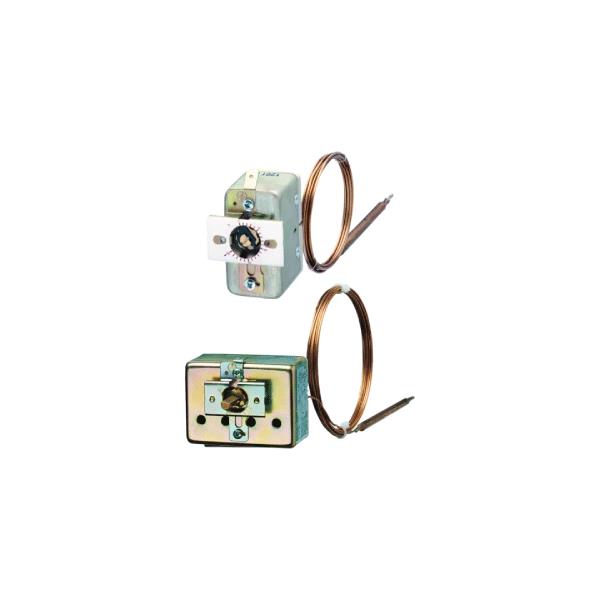
EM series to 500 °C
The devices of the EM series are available as temperature controllers (TR), temperature monitors (TW), temperature limiters (TB), safety temperature monitors (STW), and safety temperature limiters (STB). In the event of a malfunction the STB places the system being monitored in a safe operating status.
 |
 |
 |
|
Self-monitoring
in the event of a pressure drop |
Without auxiliary
energy |
Multiple
single pole combinations |
AMTHF series
The devices of AMTHF series are available with 2, 3, or 4 switching steps as temperature controllers (TR) and temperature monitors (TW). The sequence contact gap of the individual switching steps in Kelvin is adjusted in a fixed manner according to customer requirements per default.
 |
 |
|
|
For universal
use |
Impervious to
environmental influences |
Without auxiliary
energy |