
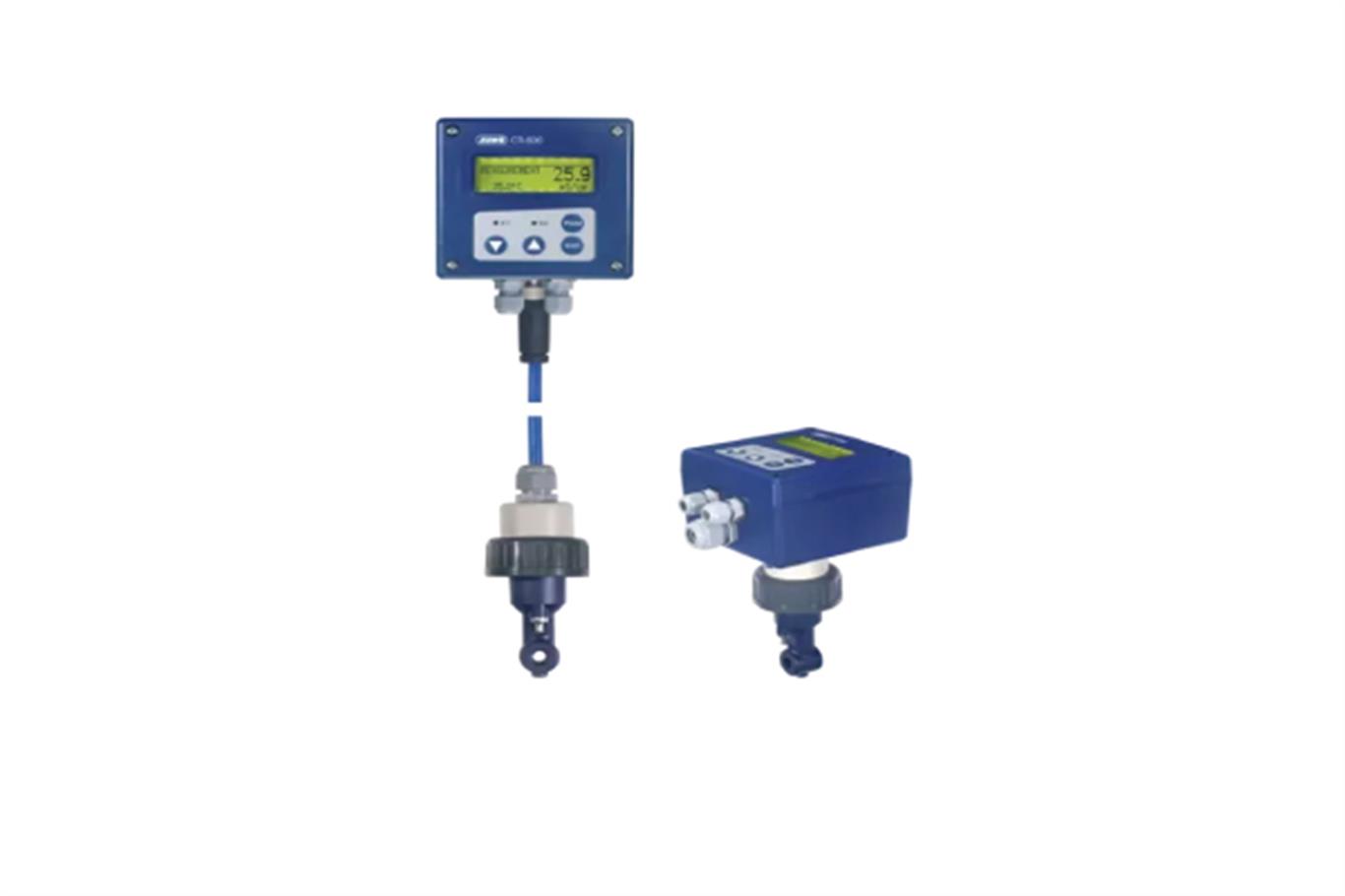
JUMO CTI-500
Inductive conductivity transmitter with switching contacts
The device is used for measuring and controlling the conductivity or the concentration of liquid media. The integrated temperature measurement enables precise and quick compensation. Additional functions allow the combined toggling of measuring range and temperature coefficient.
 |
 |
 |
|
Activation of 4
measuring ranges |
Easy-to-use
programming |
Activation of 4
temperature coefficients |
GENERAL TECHNICAL DATA |
| Measurands | Inductive conductivity; concentration of NaOH, HNO3; temperature |
| Sensor material | PP or PVDF |
| Outputs | 2 outputs and 2 potential-free contacts |
| Mounting | Pipe mounting, wall mounting |
| Features | Operation via keypad and setup program; up to 4 measuring ranges and temperature coefficients can be activated; fast-response temperature sensor |
| Protection type | IP67 |
| Versions | Combined unit (transmitter and measuring cell in one device); split version (transmitter and measuring cell connected via cable) |
| Areas of application | Water and wastewater engineering; cooling tower monitoring (salt dilution control); rinsing baths (electroplating plants); air washers |
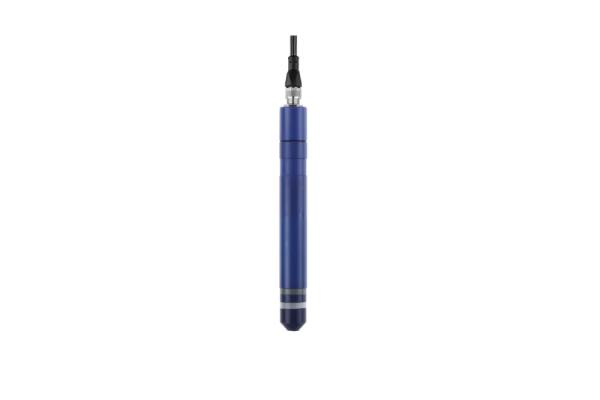
Sensor for free chlorine
These membrane-covered amperometric sensors are used to measure the concentration of free chlorine (e.g. in drinking water, swimming pool water, industrial water, process water, and cooling water). The sensors can be connected directly to a suitable indicating and control device.
|
 |
|
|
Easy calibration
|
Two-electrode/three-electrode
principle |
Integrated
temperature compensation |
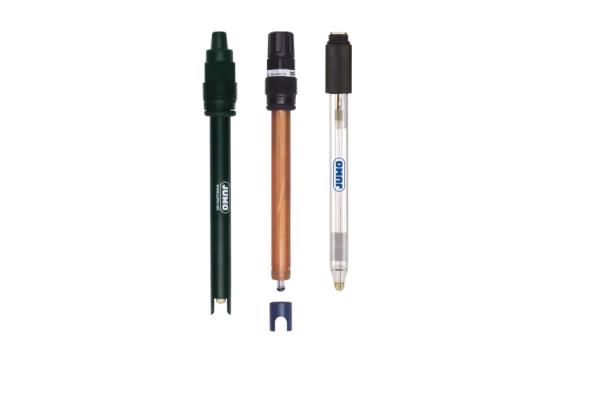
pH combination electrode with glass or plastic shaft
The electrode acquires the pH value of water and aqueous-based media. It is used, among other places, in swimming pools, aquaristics for monitoring and treating drinking water, and in greenhouse technology.
 |
 |
 |
|
Low-resistance
UW glass |
Quick measurement
results |
Low investment
costs |
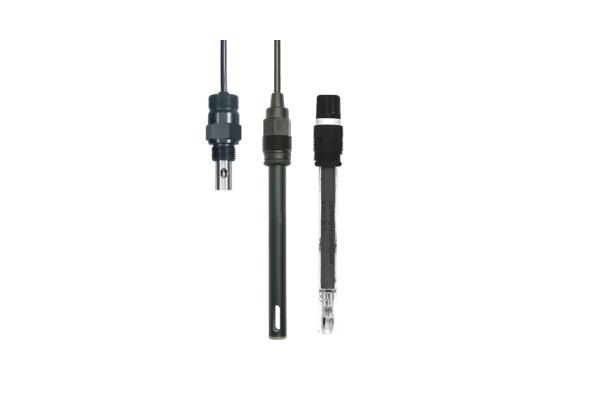
Conductive two-electrode conductivity sensor
The product is available in versions GT, EC, and GS. A special graphite is used in the GT version for water treatment. The main features of the stainless steel EC version are its very compact design type and the integrated Pt100 as a standard feature.
 |
 |
|
|
Robust design
|
Can be used for
various applications |
Minimum investment
costs |