
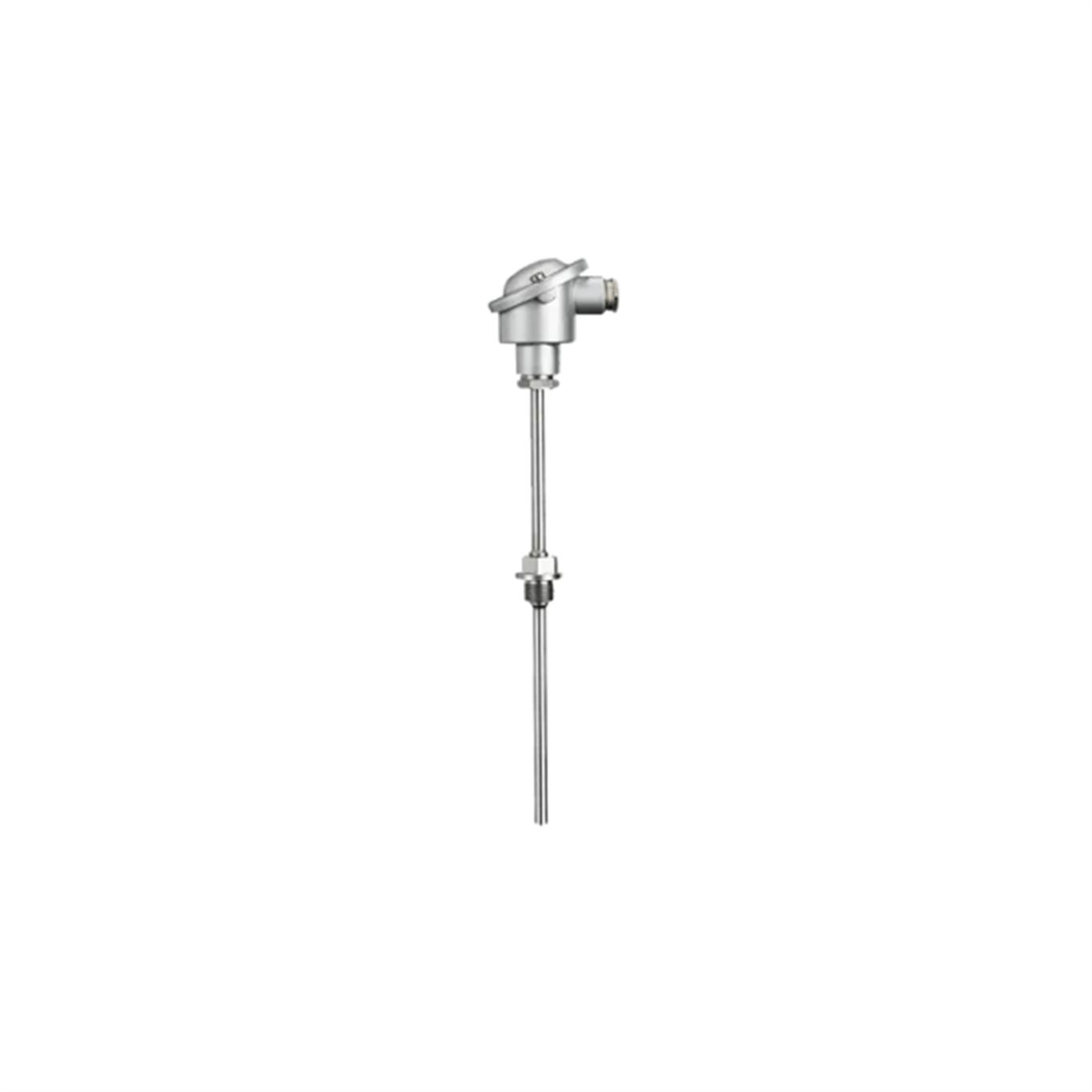
Screw-in RTD temperature probe 902020
With terminal head form B
Screw-in RTD temperature probes are predominantly used for measuring temperatures in liquids and gases. The installation type enables the formation of reliable seals for both vacuum and overpressure applications.
 |
 |
 |
|
Single/double
RTD temperature probe |
Available with
transmitter |
Interchangeable
measuring insert |
GENERAL TECHNICAL DATA |
| Approvals | Metrological registration |
| Option | Head transmitter |
| Sensor | Pt100, Pt500, Pt1000 |
| Connection | Head |
| Protection type | IP65 |
| Areas of application | Plant engineering, construction material machines, drying plants, biogas plants, combined heat and power plants |
| Process connection | Screw connection G 1, G 1/2, G 3/4 |
| Special features | Replaceable measuring insert, extension tube |
| Measuring circuits | 1/2 |
| Operating temperature | -50 to +600 °C |
| Protection fitting | Stainless steel 1.4571 |
| Terminal head | Form B, BUZ, BUZH, BBK |
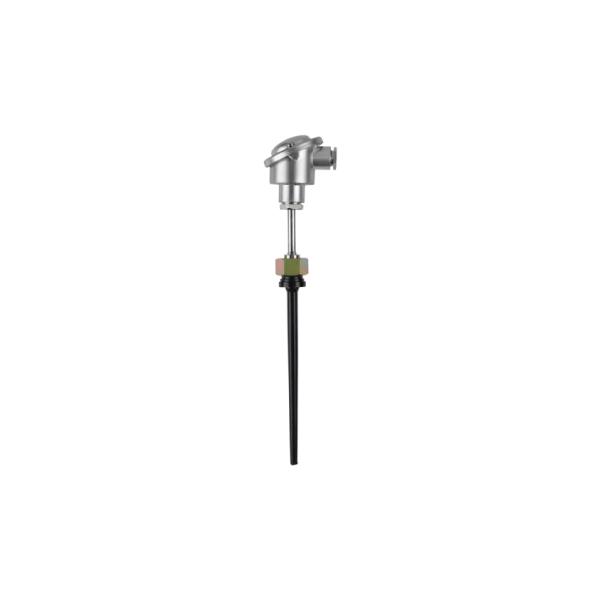
For devices and plants tested according to DIN EN 14597
Screw-in thermocouples are predominantly used for measuring temperature in liquids and gases. Protection tubes made of various materials protect the measuring insert against chemical influences and mechanical damage.
|
 |
 |
|
Single or double
thermocouple |
Use in plants
according to DIN 4754 |
For the media
water, oil, or air |
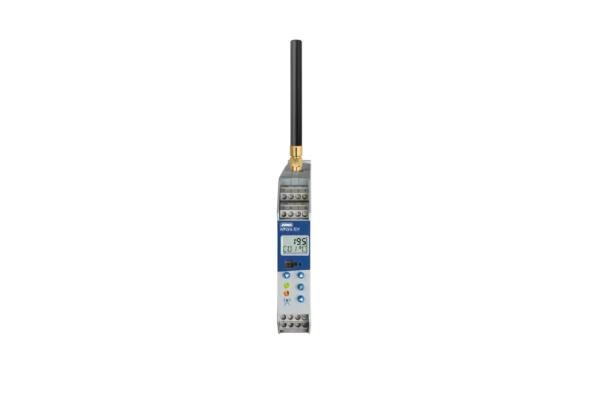
Universal receiver for JUMO wireless measuring probes
The Wtrans receiver T01, in combination with suitable Wtrans transmitters, is used for the mobile or stationary measurement of the following physical measurands: temperature, pressure, and humidity. The wireless sensor technology also works in a harsh industrial environment.
 |
 |
 |
|
Up to 4 analog
outputs |
No wiring work
required |
Customer-specific
linearization |
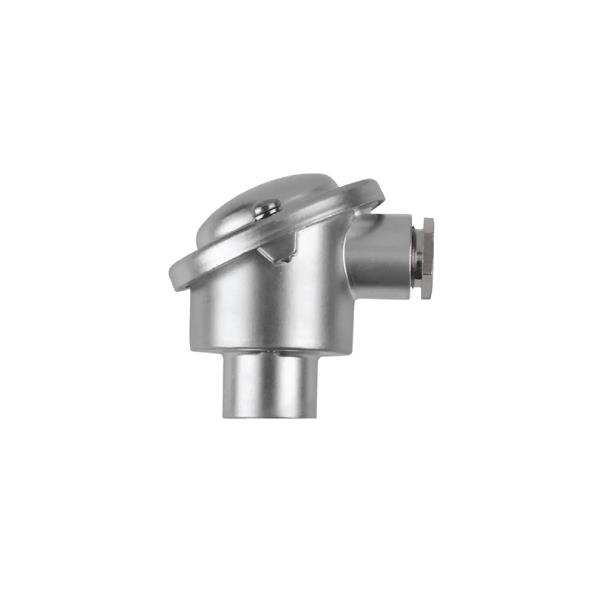
For thermocouples and RTD temperature probes
DIN EN 50446 defines the terminal head design types A and B, which differ in size and also slightly in their shape. Aluminum or plastic is used, depending on the application. These design types are suitable for the installation of a two-wire transmitter.
 |
 |
 |
|
Various
materials |
Sealable versions
|
Installation of
a transmitter |